Slope engineering in Tulsa encompasses the analysis, design, and stabilization of natural and constructed inclines to safeguard infrastructure, property, and lives. The category addresses a spectrum of geotechnical challenges unique to the region, driven by its variable topography and soil composition. From residential developments along the Arkansas River bluffs to commercial expansions in suburban foothills, understanding slope behavior is not merely regulatory compliance but a fundamental necessity. A comprehensive approach typically begins with a detailed slope stability analysis, which quantifies failure risks and informs subsequent mitigation strategies.
Tulsa's geological setting presents a complex interplay of Pennsylvanian-age shale, sandstone, and limestone bedrock, frequently mantled by residual clay soils with high plasticity. These soils, particularly the locally prevalent Dennis and Chanute formations, are notorious for their shrink-swell potential and susceptibility to softening upon moisture infiltration. The region also features loess-derived silts on upland slopes, which can be prone to sudden collapse when saturated. This inherent instability is exacerbated by Tulsa's climatic reality: intense seasonal rainfall events and periodic freeze-thaw cycles that accelerate weathering and pore-water pressure buildup, making proactive slope management essential for long-term asset resilience.
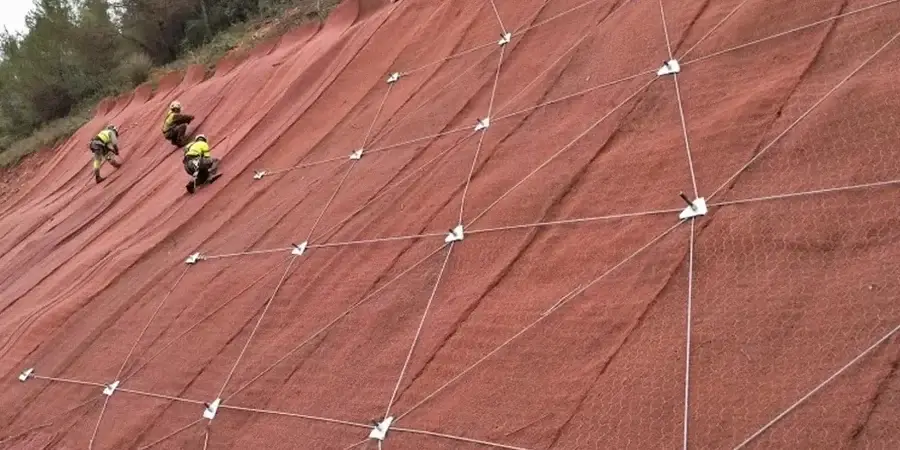
Regulatory compliance in Tulsa is governed by the International Building Code (IBC) as adopted by the City of Tulsa, specifically Chapter 18 on Soils and Foundations, which mandates geotechnical investigations for structures on slopes steeper than 3:1 (horizontal to vertical). The American Society of Civil Engineers (ASCE) 7 standard for minimum design loads is enforced, alongside local amendments requiring a minimum factor of safety of 1.5 for static conditions. For public infrastructure, the Oklahoma Department of Transportation (ODOT) Standard Specifications for Highway Construction offer rigorous criteria for earthwork and slope protection. These regulations often necessitate engineered solutions such as active/passive anchor design when conventional grading proves insufficient to meet stability thresholds.
The scope of projects requiring specialized slope intervention is broad. Transportation corridors like I-244 and Riverside Drive frequently demand cut-slope reinforcement to prevent roadway blockages. Hillside residential subdivisions in areas such as Bixby and Jenks require lot-specific stabilization plans, often integrating retaining wall design to create buildable terraces while managing lateral earth pressures. Commercial developments near Turkey Mountain or along the riverfront routinely involve deep excavations where temporary shoring and permanent slope stabilization must be engineered concurrently. Even post-construction, forensic evaluations are common for aging infrastructure where surface drainage patterns have altered over decades, reactivating ancient landslide features.
FAQ
What are the common signs of slope instability on a Tulsa property?
Typical indicators include tension cracks in the ground or pavement, tilting fence posts or retaining walls, sudden appearance of seeps or boggy areas on the slope face, and bulging soil at the toe of the incline. For structures, look for sticking doors, diagonal wall cracks, or separation between the foundation and adjacent flatwork, which often signal differential movement linked to slope creep.
How do Tulsa's clay soils specifically contribute to slope failures?
The high plasticity clays prevalent in Tulsa absorb water and expand, then shrink and crack during dry periods. These desiccation cracks create preferential pathways for rainwater to infiltrate deep into the slope, saturating the soil mass and drastically reducing its shear strength. This cyclic behavior can progressively weaken a slope over several seasons until a critical rainfall event triggers a failure.
What is the typical process for obtaining a permit for slope stabilization work in Tulsa?
The process requires submitting a geotechnical report sealed by a licensed Oklahoma engineer to the City of Tulsa Permit Center. This report must include a slope stability analysis demonstrating a minimum factor of safety of 1.5, along with construction drawings detailing the stabilization measures. A site development permit is typically required, and plans are reviewed for compliance with the IBC and local drainage ordinances before approval.
Is a slope stability analysis always required before building a retaining wall in Tulsa?
While not every small garden wall requires a full analysis, the IBC mandates it for retaining walls supporting more than 24 inches of unbalanced backfill, or any wall located on or near a slope steeper than 3:1. For walls taller than four feet or those supporting surcharge loads from structures, a professional analysis is essential to determine global stability, not just the wall's internal structural capacity.
Location and service area
We serve projects across Tulsa and surrounding areas.