In-situ testing forms the backbone of geotechnical engineering in Tulsa, encompassing a range of field investigations that evaluate soil, rock, and groundwater conditions directly at the project site. Unlike laboratory tests on extracted samples, these methods measure properties in their natural state, capturing critical factors like moisture content, density, and stress conditions that are easily disturbed during transport. For Tulsa's diverse landscape, this means obtaining reliable data for foundation design, slope stability analysis, and earthwork quality control. The category covers everything from penetration tests to measure soil strength, to precise field density test (sand cone method) procedures that verify compaction levels, ensuring that the ground beneath our structures will perform as expected over decades of service.
Tulsa's geology presents a unique profile that directly influences the necessity and interpretation of in-situ testing. The city straddles the boundary between the forested hills of the Ozarks and the beginning of the Great Plains, underlain by sedimentary rocks like shale, limestone, and sandstone from the Pennsylvanian age. More critically for construction, these bedrock formations are often mantled by variable deposits of residual clay soils, alluvial sands and silts along the Arkansas River and its tributaries, and expansive clays that swell and shrink dramatically with moisture changes. In-situ tests like the standard penetration test (SPT) and cone penetration test (CPT) are essential to delineate these erratic subsurface profiles, identifying weak zones, cavities in limestone, or the depth to competent bearing strata that can safely support structural loads.
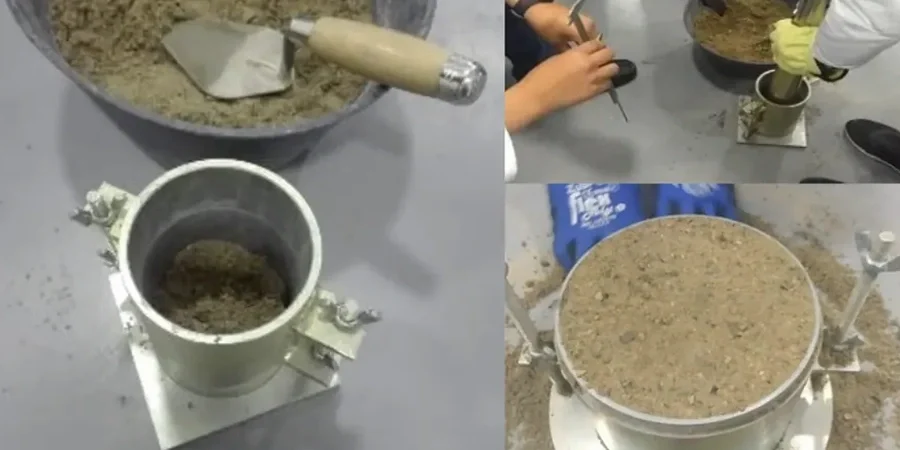
Adherence to established national standards is non-negotiable for all in-situ investigations in Tulsa. The American Society for Testing and Materials (ASTM) provides the primary framework, with key standards such as ASTM D1586 for the Standard Penetration Test and ASTM D5778 for the Cone Penetration Test. For earthwork and compaction control, methods like the field density test (sand cone method) are performed strictly in accordance with ASTM D1556, while nuclear gauge tests follow ASTM D6938. These standards dictate equipment calibration, procedural steps, and data reporting, ensuring that results are consistent, defensible, and accepted by local building officials, geotechnical engineers, and regulatory agencies reviewing project compliance.
The requirement for rigorous in-situ testing spans virtually every construction sector in the Tulsa metropolitan area. Large-scale commercial developments, from mid-rise buildings in the downtown Blue Dome District to sprawling retail centers in South Tulsa, depend on subsurface data to design deep foundations or ground improvement schemes. Public infrastructure projects, including highway expansions, bridge replacements over the Arkansas River, and stormwater detention basins, rely on these tests for slope stability and seepage analysis. Even residential subdivisions require compaction testing of building pads and utility trench backfill, often using the sand cone density test to verify that fill materials meet project specifications, preventing future settlement and foundation distress.
Available services
FAQ
What is the primary purpose of in-situ testing compared to laboratory testing?
In-situ testing evaluates soil and rock properties directly in their natural, undisturbed state, preserving in-situ stresses, moisture conditions, and fabric. This avoids the sample disturbance that occurs during drilling, transport, and preparation for lab tests, providing more representative data for parameters like density, shear strength, and permeability that are critical for accurate geotechnical design.
Which in-situ test is most commonly used for foundation design in Tulsa?
The Standard Penetration Test (SPT), performed in accordance with ASTM D1586, is the most widespread method in Tulsa for soil exploration. It provides disturbed samples for classification and a blow count (N-value) that correlates to relative density and strength, helping engineers assess bearing capacity and settlement potential in the region's variable residual clays and alluvial deposits.
How do local expansive clay soils affect the choice of in-situ testing methods?
Tulsa's expansive clays are highly moisture-sensitive, making tests that capture in-situ moisture and density crucial. Methods like the nuclear density gauge or sand cone test are used for compaction control, while pressuremeter tests or CPTu soundings can profile soil stiffness and detect zones of weakness, informing foundation designs that mitigate swelling and shrinking damage through deep piers or moisture barriers.
Are there specific ASTM standards that govern in-situ testing procedures in the United States?
Yes, ASTM International publishes the definitive standards used nationally and in Tulsa. Key examples include ASTM D1586 for the Standard Penetration Test, ASTM D5778 for the Cone Penetration Test, ASTM D1556 for the sand cone density method, and ASTM D6938 for nuclear gauge testing. Adherence to these ensures data quality, legal defensibility, and regulatory approval.
Location and service area
We serve projects across Tulsa and surrounding areas.