The laboratory category within geotechnical engineering encompasses the systematic testing and analysis of soil and rock samples to determine their physical, mechanical, and chemical properties. In Tulsa, this phase of investigation is fundamental to understanding the behavior of the ground that will support everything from single-family homes to major infrastructure. Without precise laboratory data, foundation designs would rely on assumptions, leading to either costly over-engineering or, more dangerously, insufficient support that could result in settlement, cracking, or catastrophic failure. The controlled environment of a geotechnical lab provides the quantitative values—strength, compressibility, permeability—that engineers need to model ground-structure interaction accurately.
Tulsa's geological setting makes thorough laboratory testing particularly critical. The city is situated on a complex sequence of Pennsylvanian-age sedimentary rocks, predominantly shale, limestone, and sandstone, which are mantled by varying thicknesses of residual and alluvial soils. The Arkansas River and its tributaries have deposited extensive layers of fat clays and silts across the floodplain, materials known for their high shrink-swell potential. This characteristic, driven by the presence of smectite clay minerals, can exert significant pressure on foundations and pavements during the wet-dry cycles common to Oklahoma's climate. A laboratory analysis, including an Atterberg limits test, is the definitive way to quantify this expansive behavior and assess the risk it poses to a structure.
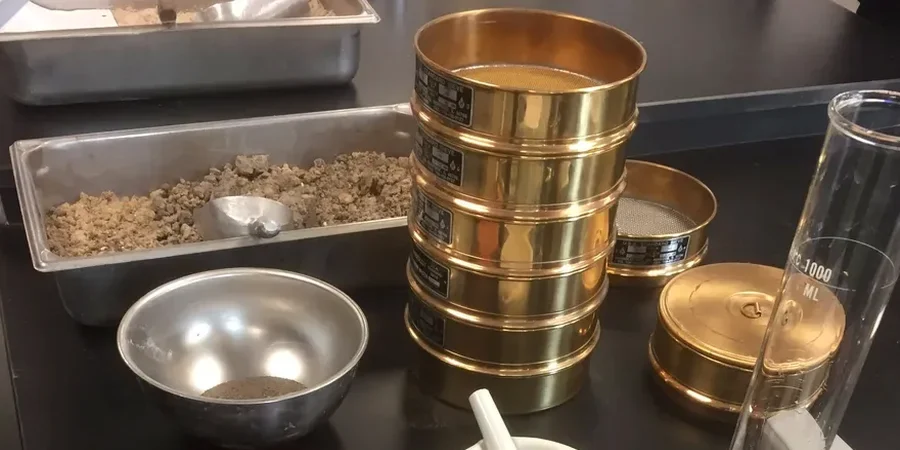
Adherence to established standards is non-negotiable for geotechnical laboratories operating in Oklahoma, and by extension, Tulsa. The primary framework is provided by ASTM International, with key standards such as ASTM D422 for particle-size analysis, ASTM D4318 for Atterberg limits, and ASTM D2435 for consolidation testing. These methods ensure consistency and repeatability in results. For projects involving public funds or highways, the Oklahoma Department of Transportation (ODOT) has its own set of specifications, often referencing AASHTO (American Association of State Highway and Transportation Officials) methods, which are closely aligned with ASTM but may have specific regional modifications. A proper laboratory program must be designed to meet the exact requirements of the governing authority, whether it is a local building code, an ODOT specification, or the International Building Code (IBC) as adopted by the City of Tulsa.
The range of projects in Tulsa that depend on geotechnical laboratory data is vast. A comprehensive site investigation for a new commercial development in South Tulsa might require a full suite of tests, from a basic grain size analysis (sieve + hydrometer) to classify the soil according to the Unified Soil Classification System (USCS), to direct shear and triaxial compression tests for designing retaining walls and slopes. The rehabilitation of an aging bridge pier over the Arkansas River would demand unconfined compression and consolidation tests on undisturbed samples to verify the foundation's current load-bearing capacity. Even a modest residential addition benefits from a simple moisture content and Atterberg limits profile to ensure the new foundation will perform compatibly with the existing one, mitigating differential settlement.
FAQ
What is the main purpose of a geotechnical laboratory testing program?
The primary purpose is to accurately determine the engineering properties of soil and rock from a project site. These properties, including strength, compressibility, and permeability, are essential for designing safe and cost-effective foundations, assessing slope stability, and predicting how the ground will behave under the load of a proposed structure, moving beyond visual classification to quantitative data.
How do local soil conditions in Tulsa influence the selection of laboratory tests?
Tulsa's prevalent fat clays with high shrink-swell potential demand specific testing. Laboratory programs here almost always prioritize Atterberg limits to measure plasticity and expansion potential. The complex alluvial and residual soils also necessitate detailed grain size analyses to properly classify the material and predict its drainage and compaction characteristics under the region's wet-dry cycles.
Which ASTM standards are most commonly applied to geotechnical lab work in Oklahoma?
The most frequently applied standards are ASTM D422 for particle-size analysis, ASTM D4318 for liquid and plastic limits, ASTM D2435 for one-dimensional consolidation, and ASTM D3080 for direct shear testing. For projects under the Oklahoma Department of Transportation, AASHTO methods like T 88 and T 89, which are technically equivalent to their ASTM counterparts, are often specified.
At what stage of a project are soil samples typically sent to a geotechnical laboratory?
Samples are sent to the laboratory during the geotechnical site investigation phase, which occurs before the final structural design is completed. This process begins with a subsurface exploration where a drilling crew extracts samples from various depths. The samples are then carefully preserved and transported to the lab to undergo the testing program specified by the geotechnical engineer based on the planned construction.
Location and service area
We serve projects across Tulsa and surrounding areas.