Road geotechnics in Tulsa, Oklahoma, encompasses the full spectrum of subsurface investigation, soil characterization, and pavement structural design required to build durable, safe transportation corridors. This discipline bridges geology, civil engineering, and materials science to address the unique challenges posed by the region's expansive clays, variable bedrock depths, and seasonal moisture fluctuations. For municipalities, county road departments, and private developers alike, a thorough geotechnical framework is not optional—it is the foundation upon which long-term pavement performance and maintenance budgets depend.
Tulsa sits at the transition between the Osage Plains and the Ozark Plateau, underlain by Pennsylvanian-age shale, limestone, and sandstone formations. The near-surface soils are predominantly residual lean and fat clays derived from weathered shale, often classified as CH or CL per the Unified Soil Classification System. These soils exhibit moderate to high plasticity, with swell potential that can exceed three percent under moisture changes, making them a primary concern for road engineers. Additionally, the Arkansas River floodplain deposits include interbedded silts and sands that are susceptible to scour and liquefaction under saturated conditions, requiring careful evaluation during the CBR study for road design phase.
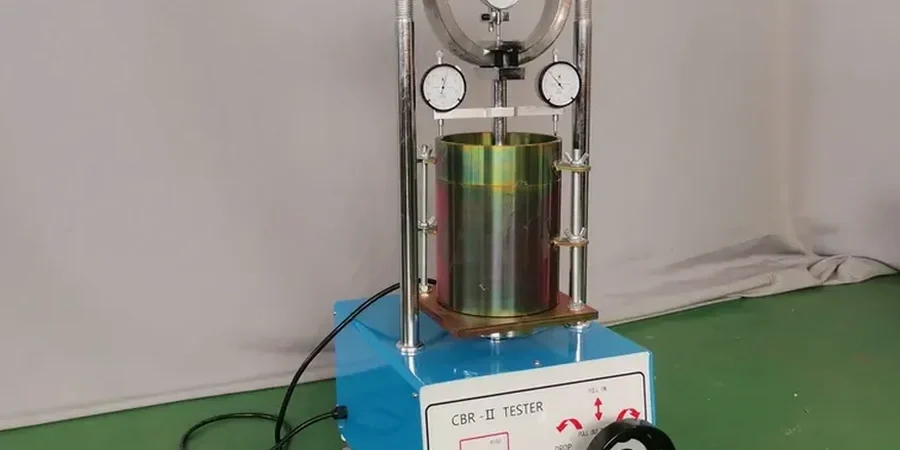
Design and construction of roadways in Tulsa must comply with the Oklahoma Department of Transportation (ODOT) Standard Specifications for Highway Construction, which incorporate AASHTO guidelines for geotechnical investigations and pavement design. The 1993 AASHTO Guide for Design of Pavement Structures remains the backbone for determining structural number requirements, while ODOT’s SiteManager software enforces locally calibrated material properties. For projects within Tulsa County, additional requirements from the Indian Nations Council of Governments (INCOG) may apply, particularly regarding stormwater infiltration and subgrade stabilization on arterial streets. These standards govern everything from minimum CBR values for subgrade acceptance to the gradation and plasticity index limits for select fill materials.
The types of projects that demand rigorous road geotechnical input range from greenfield residential subdivisions and commercial site access roads to full-depth reclamation of failed urban arterials. An industrial park expansion in north Tulsa, for instance, might require both flexible pavement design for parking lots and rigid pavement design for heavy truck loading docks, each relying on distinct subgrade modulus inputs. Similarly, a rural two-lane widening project near Keystone Lake would necessitate a comprehensive CBR study to verify that the existing subgrade can support the proposed structural section without excessive lime stabilization. In every case, the geotechnical investigation directly shapes the pavement type selection, layer thicknesses, and drainage provisions.
FAQ
What are the most common geotechnical challenges for road construction in Tulsa?
The primary challenge is expansive clay subgrades with high plasticity indices, which swell when wet and shrink during droughts, causing pavement cracking and roughness. Shallow groundwater in Arkansas River floodplains, variable bedrock depths, and the presence of sulfate-rich soils that attack cement-stabilized layers also demand careful investigation and mitigation during design.
How does ODOT regulate geotechnical investigations for roadway projects?
ODOT requires geotechnical investigations to follow AASHTO standards, with minimum boring depths of 1.5 meters below proposed subgrade or to refusal. Reports must include soil classifications, CBR values, moisture-density relationships, and swell potential testing. For federally funded projects, the investigation scope must also satisfy FHWA guidelines and be sealed by a licensed professional engineer.
When is a CBR study required for a road design in Tulsa?
A CBR study is typically required for any new roadway, widening, or reconstruction project where subgrade strength will govern pavement thickness. ODOT mandates CBR testing at intervals not exceeding 150 meters along the alignment and at every major cut or fill transition. It is also essential when evaluating the feasibility of stabilizing existing soils with lime or cement.
What is the difference between flexible and rigid pavement from a geotechnical perspective?
Flexible pavements distribute loads through a layered system and are more sensitive to subgrade deformation, making CBR values and resilient modulus critical inputs. Rigid pavements rely on slab stiffness and modulus of subgrade reaction (k-value), which is influenced by soil type and moisture. Geotechnically, rigid pavements can bridge minor subgrade defects but are vulnerable to pumping and erosion under joints if drainage is inadequate.
Location and service area
We serve projects across Tulsa and surrounding areas.